
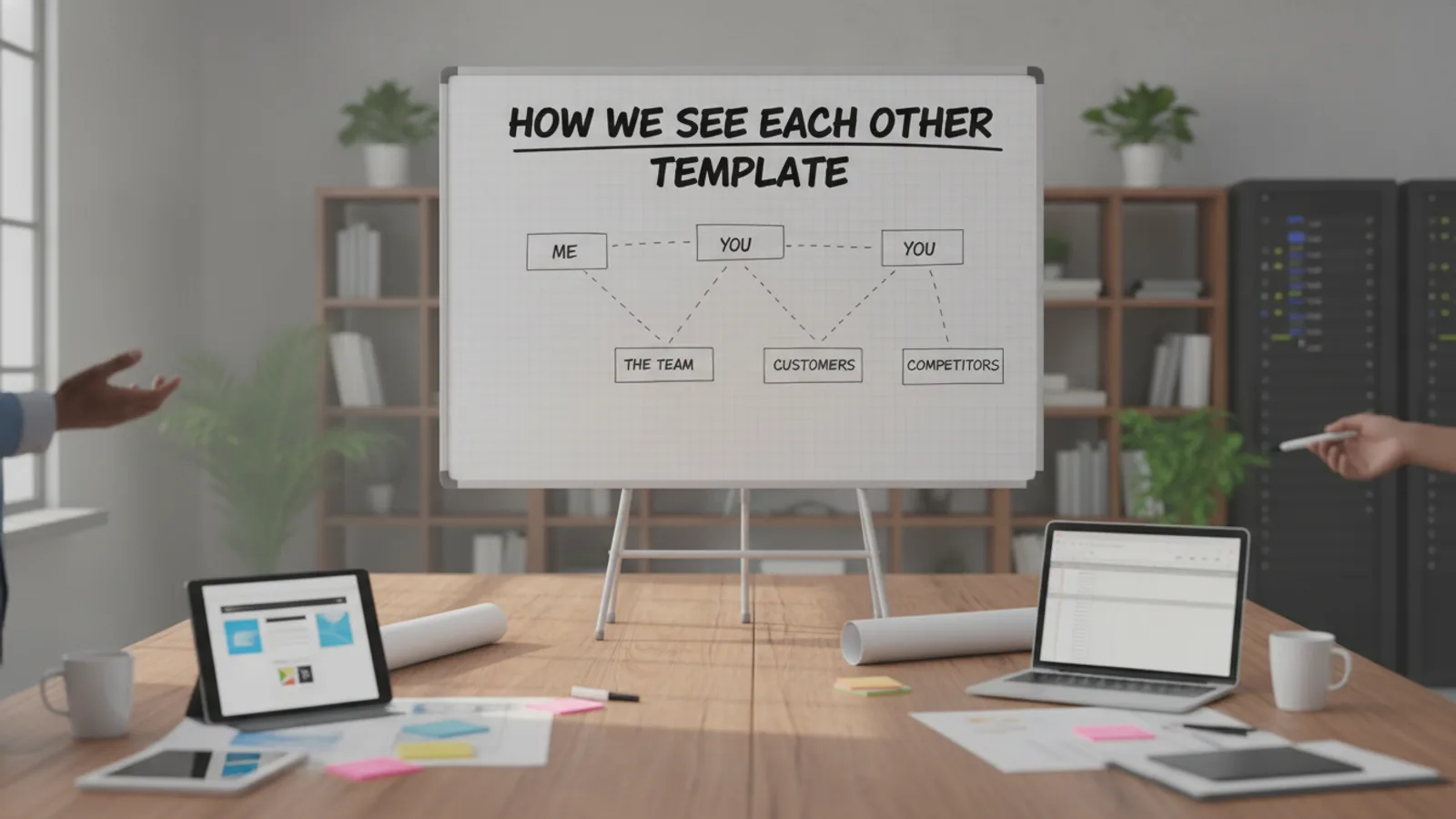
How We See Each Other Template
This guide explains how to approach how we see each other template, including the preparation, practical steps, common mistakes, and final checks that help you finish with confidence.
Before You Start
Proper preparation is the key to a successful session. Rushing into this exercise without setting the stage can make it feel awkward or unproductive. Taking a few moments to gather the right materials and establish the right context will ensure everyone feels comfortable and ready to participate constructively.
What You Need
Safety, Timing, or Context Checks
The success of this tool hinges entirely on trust. If people don't feel safe, they won't be honest, and the exercise will fail. Before you begin, confirm that the team has a baseline of mutual respect. This template is a tool to build on existing trust, not create it from scratch in a toxic environment.
Step-by-Step Instructions
Follow these steps to guide your group through the process smoothly. The facilitator's role is to create structure and safety, allowing the conversation to flow naturally within the framework you provide.
Quick Reference
Common Problems When You Use the How We See Each Other Template
Even with careful planning, you might encounter some challenges. Here’s how to navigate common issues that can arise during the process.
- Problem: Participants are quiet and reluctant to share.
This often stems from a lack of trust or a fear of being judged. The facilitator should lead by example, sharing their own template with genuine vulnerability. Reiterate the ground rules, especially that participation is voluntary and there are no right or wrong answers. Sometimes, simply acknowledging the awkwardness can break the ice. - Problem: The conversation turns into a complaint session.
If the sharing shifts from "I need this to work well" to "I'm annoyed when you do that," the facilitator must gently intervene. Steer the focus back to a forward-looking perspective. Use phrasing like, "Thank you for sharing that. How can we, as a team, address that need going forward?" Keep the focus on solutions and shared understanding, not blame. - Problem: The information is ignored after the meeting ends.
This is a common failure point. To prevent it, the team leader and facilitator must actively model using the information. For example, "I'm sending this request via email because I know from your template you prefer details in writing." When people see the templates being used, they understand their value and are more likely to use them too. - Problem: A participant's declared needs are unreasonable or disruptive.
Occasionally, someone might state a preference that is incompatible with the team's goals (e.g., "I don't attend meetings before noon"). This requires a separate, private conversation. A manager should follow up to understand the need behind the request and find a solution that balances individual preferences with team responsibilities.
Advanced Tips for the How We See Each Other Template
Once you're comfortable with the basic process, you can integrate the template more deeply into your team's culture with these advanced strategies.
- Integrate It Into Your Onboarding Process: Make filling out and sharing the template a standard part of a new hire's first week. It's a fantastic way to make them feel seen and understood from day one, and it helps the existing team learn how to best support their new colleague.
- Create a "Team Charter" Summary: After a session, anonymise and aggregate the key themes into a one-page "Team Working Agreement" or "Team Charter." This document can outline shared values and communication protocols, such as "We agree to provide agendas for all meetings" or "We default to asynchronous communication for non-urgent matters."
- Schedule Annual or Biannual Refreshes: People change, and so do their preferences and circumstances. Make it a habit to revisit the templates every 6 to 12 months, or after a significant change in the team's structure. This keeps the information current and relevant.
- Pair with Other Frameworks: If your team uses personality assessments like Myers-Briggs, DiSC, or StrengthsFinder, the "How We See Each Other" template is the perfect practical follow-up. It helps translate high-level personality traits into concrete, actionable workplace behaviours and needs.
How We See Each Other Template FAQ
What are the essential sections to include in the template?
A great template should cover how a person communicates, works, and handles stress. We recommend including: Communication Preferences (e.g., Slack vs. email), How I Like to Receive Feedback (public vs. private, direct vs. gentle), How to Know When I'm Stressed, What I Need to Do My Best Work, and an optional section on Core Personal Values.
Can this template be used outside of a work environment?
Absolutely. The core concept of making needs and preferences explicit is incredibly valuable for any relationship. Couples, families, flatmates, or volunteer groups can adapt the prompts to their specific context to improve understanding and reduce conflict.
What should I do if a team member refuses to participate?
You must respect their decision. The exercise is built on voluntary participation and trust. Forcing someone to join will only create resentment and lead to inauthentic answers. You can gently explain the intended benefits, but if they still decline, simply proceed with those who are willing.
How should we handle very personal or sensitive information if it comes up?
The facilitator should remind everyone at the start that they should only share what they are comfortable with their colleagues knowing. If a participant shares something deeply personal, the group's role is simply to listen with empathy and thank them for their trust. It is not a therapy session, and colleagues should not try to give advice unless explicitly asked.
Is this effective for remote or hybrid teams?
Yes, it is arguably even more valuable for remote and hybrid teams. In these environments, we miss out on the non-verbal cues and casual interactions that help us understand our colleagues. This template provides a structured way to bridge that gap and build the explicit communication habits that are essential for successful remote collaboration.
Final Checklist for How We See Each Other Template
Use this final checklist to ensure you've covered all the bases for a smooth and effective session.
- Secure buy-in from all potential participants before scheduling.
- Book a time and place (virtual or physical) that is private and free of distractions.
- Prepare your template document with clear, concise prompts.
- Distribute the template to participants ahead of the session if possible.
- Start the session by clearly explaining the purpose and ground rules.
- Allocate at least 10 minutes for silent, individual reflection.
- Facilitate the sharing process, ensuring everyone gets a chance to speak.
- Encourage active listening and respectful, clarifying questions.
- Summarise the key takeaways and common themes at the end.
- Agree on where the completed templates will be stored for future reference.
- Thank everyone for their openness and participation.